
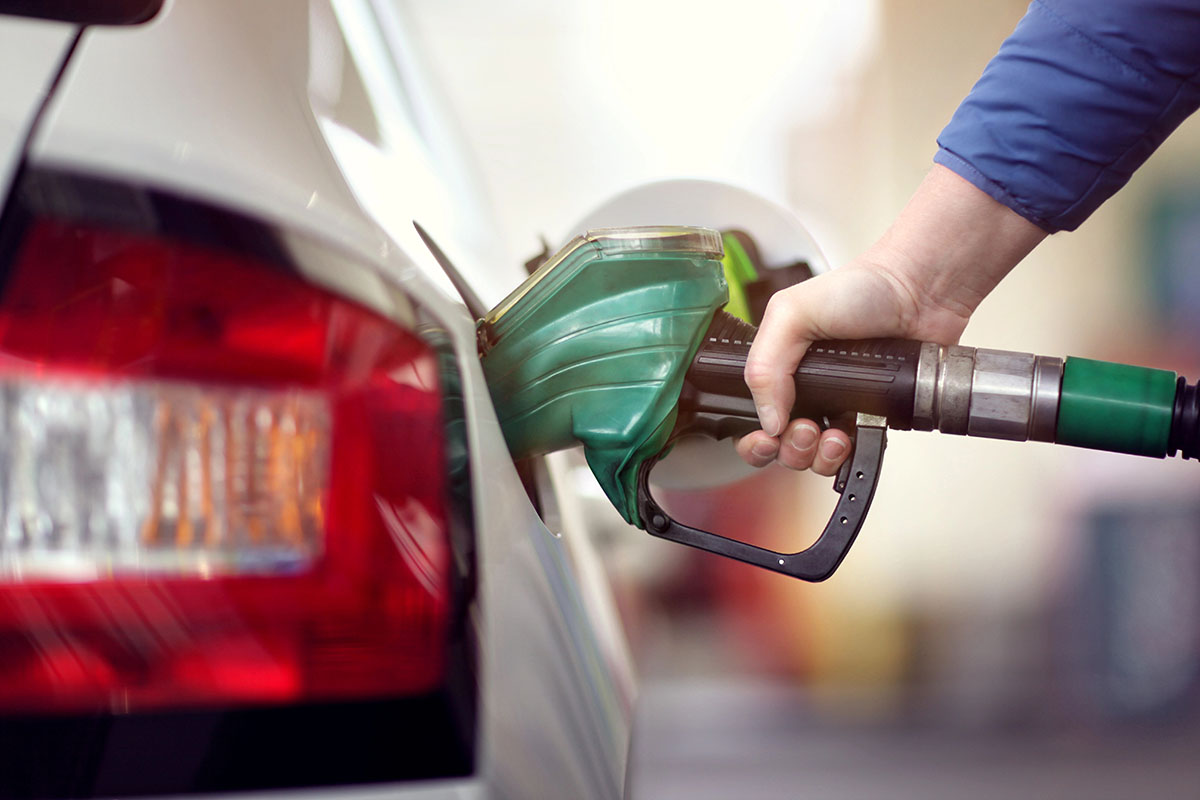
We all feel the pain at the pump. When gas prices fluctuate, every driver pays a little closer attention to how many miles they’re getting out of a tank. But what happens when your driving habits have not changed; the commute is the same, yet you’re finding yourself stopping for gas more frequently? That’s when smart drivers start thinking about car and EV maintenance in Buda to protect their fuel budget.
A sudden or gradual drop in fuel economy is rarely a fluke. It’s a diagnostic symptom. Your vehicle is a complex machine that relies on a precise ratio of air and fuel to run efficiently. When that balance is thrown off by a failing component or maintenance oversight, your engine compensates by burning more gasoline than necessary, often requiring auto diagnostics in Buda TX.
Ignoring a drop in Miles Per Gallon (MPG) is essentially throwing money away. While the cost of a repair might seem like an unwanted expense, the cost of filling a tank that burns fuel inefficiently adds up to a much larger sum over the course of a year. Here are the hidden engine issues that are likely killing your fuel economy and might even trigger a check engine light.
The Oxygen Sensor: The Silent Efficiency Killer
Modern vehicles are equipped with oxygen sensors (O2 sensors) located in the exhaust system. These sensors monitor the amount of unburned oxygen exiting the engine. They send this data to the car's computer, which adjusts the fuel injection to maintain the perfect air-fuel mixture.
Over time, O2 sensors can become coated in oil ash or carbon byproducts, reducing their ability to read oxygen levels accurately. When an O2 sensor starts to fail, it often defaults to a "rich" reading. This tricks the computer into thinking the engine is running lean (too much air), so it commands the fuel injectors to dump more gas into the cylinders.
This can decrease your fuel economy by as much as 40 percent. The tricky part is that a failing O2 sensor may not trigger a "Check Engine" light immediately, meaning you could be driving for months with a rich mixture before you realize there is a mechanical problem.
Pro-tip: Stick to your manufacturer’s tune-up schedule and have the O2 sensor readings checked during routine service, especially if you notice a gradual MPG drop. Using the correct oil (to reduce ash) and fixing small issues like oil burning or exhaust leaks early helps prevent the sensor from getting contaminated in the first place.
Spark Plugs and Ignition Coils
Combustion requires three things: fuel, air, and a spark. If your spark is weak, the fuel does not burn completely.
Spark plugs have a finite lifespan. As they wear down, the gap between the electrodes widens, or they become fouled with carbon deposits. This leads to incomplete combustion or "misfires." A severe misfire will cause the car to shake, but minor misfires can go unnoticed by the driver.
When a cylinder misfires or burns inefficiently, the energy from that fuel is wasted. The engine has to work harder to maintain speed, which requires—you guessed it—more fuel. Replacing old spark plugs is one of the most affordable and effective ways to restore lost MPG.
The Mass Airflow Sensor
While the O2 sensor measures air leaving the engine, the Mass Airflow Sensor (MAF) measures the air entering it. Located near the air filter, this sensor tells the computer exactly how much air is coming in so it knows how much fuel to inject.
The MAF is very sensitive. If your air filter is dirty or of low quality, microscopic dust particles can bypass the filter and coat the MAF sensor wire. This dirt insulates the wire, causing it to send sluggish or inaccurate readings to the computer. If the computer miscalculates the airflow, it will mess up the fuel mixture, causing the engine to run roughly and consume excess gas.
Fuel Injectors: The Spray Pattern Matters
Fuel injectors are precision instruments designed to spray gasoline into the engine in a very fine, specific mist pattern. This mist allows the fuel to mix evenly with the air and burn instantly when the spark plug fires.
Over tens of thousands of miles, the varnish and deposits found in gasoline can clog the tiny tips of the injectors. Instead of a fine mist, a clogged injector might dribble fuel or spray a solid stream. Liquid fuel does not burn as efficiently as vaporized fuel. This results in wasted gas that is pushed out of the exhaust rather than being converted into power. Professional fuel system cleaning can often restore the proper spray pattern and improve efficiency.
The Thermostat: Stuck in Warm-Up Mode
This is a less obvious but common culprit. Your engine is designed to run most efficiently at a specific operating temperature (usually around 200 degrees Fahrenheit). The thermostat regulates this temperature.
If a thermostat fails and gets stuck in the "open" position, coolant constantly flows through the engine, preventing it from ever reaching that optimal hot temperature. The car's computer sees that the engine is cold and stays in "open loop" mode. In this mode, the computer injects extra fuel to help the engine warm up—similar to using the choke on an old lawnmower. If the thermostat is broken, the car never leaves this fuel-rich warm-up mode, drastically reducing your highway mileage.
Why It Pays to Investigate MPG Loss Early
Ignoring a drop in fuel economy can be costly.
Potential impacts:
- You spend more on fuel every month
- Underlying issues can damage other components over time
- Emissions may increase, which can be an inspection problem in some areas
For example:
- A failing oxygen sensor can damage a catalytic converter if unaddressed
- A sticking brake caliper can overheat and warp a rotor
Addressing small problems early is nearly always cheaper than waiting until multiple systems are affected.
When To Have Your Vehicle Checked
Consider scheduling a professional inspection at a shop like Local Automotive if:
- Your MPG has dropped by 10 to 20 percent or more without a clear reason
- You have a check engine light, even if the car seems to run fine
- You notice other symptoms, such as rough idle, hesitation, poor heat, or strange smells
- Your state inspection is coming up and you suspect emissions may be affected
Any good shop will:
- Review your symptoms and history
- Scan for diagnostic trouble codes
- Inspect air, fuel, ignition, and exhaust systems
- Check for mechanical drag from brakes or bearings
From there they can recommend targeted repairs rather than guessing at random parts.
FAQs
Why hasn't my "Check Engine" light come on if my MPG is dropping?
The car's computer has a threshold for error. It can compensate for worn spark plugs or a slightly dirty MAF sensor for a long time by adjusting fuel trims. The light typically only comes on when the computer can no longer compensate for the problem. Your MPG will drop during that compensation period long before the light illuminates.
Will changing my air filter improve gas mileage?
On older carbureted cars, yes. On modern fuel-injected cars, a dirty air filter mainly hurts acceleration and power, not necessarily MPG, because the computer adjusts the fuel flow to match the reduced airflow. However, a clean filter protects the engine and the MAF sensor, which indirectly protects your fuel economy.
Is a "tune-up" still a real thing for modern cars?
The term "tune-up" is outdated, but the service is still necessary. We no longer adjust carburetors or timing belts manually. Today, a tune-up refers to a scheduled maintenance interval that includes replacing spark plugs, filters, and inspecting the ignition system. Sticking to the manufacturer's schedule is the best way to prevent MPG loss.
Can old engine oil affect fuel economy?
Very old or degraded oil can increase internal friction, though the effect on MPG is usually modest compared to other issues. However, running far past oil change intervals can contribute to long term wear that affects both performance and economy. Regular oil and filter changes using the correct grade help maintain efficiency.
Does using the air conditioner really lower my MPG?
Yes. The AC compressor puts a significant load on the engine, which requires more fuel to maintain power. However, driving on the highway with the windows down creates aerodynamic drag, which also lowers MPG. The general rule is: windows down for city driving, AC on for highway driving.
How much of an MPG drop is considered normal?
Small variations of 1 to 2 MPG are normal due to weather, traffic, and trip length. Larger drops, such as going from 30 MPG to 24 MPG over similar routes, are less likely to be normal and more likely to indicate a problem. It is helpful to track MPG over several fill ups before drawing conclusions.
Will fuel system cleaners from the parts store fix bad gas mileage?
Over the counter fuel cleaners may help with very minor injector deposits, but they are unlikely to solve significant mechanical or sensor issues. Relying on additives instead of proper diagnosis can delay needed repairs. If MPG has dropped substantially, a comprehensive inspection is a better starting point.
Getting Your Fuel Economy Back on Track
A drop in MPG is your vehicle telling you that something has changed. While driving habits and seasons account for some variation, persistent or significant decreases often point to hidden issues in the engine, fueling, ignition, or braking systems.
The most efficient way to respond is to:
- Confirm your driving and tire basics are in order
- Pay attention to other small symptoms
- Have a professional perform a focused diagnostic check
Do not accept poor performance as the new normal for your vehicle. If you’re visiting gas stations more often than you should, bring your vehicle to Local Automotive. Our team has the tools for a thorough Buda engine light check. We read the data from your O2 sensors, fuel trims, and ignition system to pinpoint exactly where your fuel is going and what needs to be repaired.