
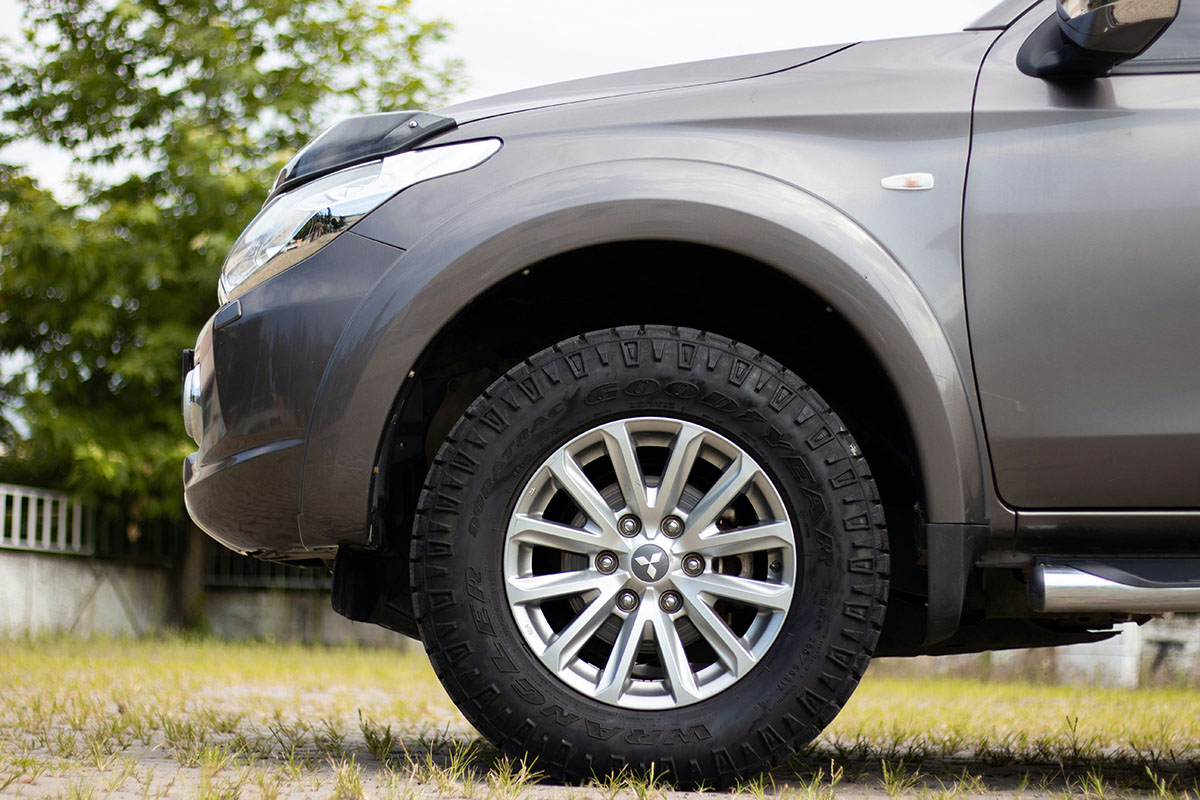
Your car has exactly four contact points with the road: the tire patches, each roughly the size of your hand. Acceleration, braking, and steering all route through those four pieces of rubber. Nothing else in the vehicle works without them. Yet car maintenance experts in Buda ranks them among the most skipped items in routine car care, even as tires are the one component where failure has immediate physical consequences.
Thin tread is a concrete safety problem, not a technicality. According to NHTSA estimates, worn and underinflated tires contribute to thousands of crashes in the U.S. every year. Stopping distances climb sharply in wet conditions as tread depth drops, and the risk of hydroplaning, where the tire rides a film of water instead of gripping the road, increases well before tires reach the legal limit. The good news: you can assess your tires in a few minutes with coins from your pocket.
Why Tread Depth Matters
The channels cut into your tires aren't decorative. They're engineered to push water out from under the tire's contact patch so the rubber stays on the road surface. As tread wears down, those channels get shallower, water has nowhere to go, and grip drops. At 2/32 of an inch, the legal minimum in most U.S. states, a tire's ability to resist hydroplaning is seriously compromised. The tests below show you exactly where your tires stand.
Test 1: The Penny Test
The penny test is the quick check for whether your tires have crossed the legal wear threshold. It's a binary result: pass or replace.
- Insert a standard U.S. penny into one of the main tread grooves with Lincoln's head facing down.
- If you can see the top of Lincoln's head, the tread is at or below 2/32 of an inch.
- Any visible portion of Lincoln's head means the tires are legally worn out. Replace them now.
Test 2: The Quarter Test
The penny test catches tires that are already finished. The quarter test gives you earlier warning, enough lead time to budget and shop rather than scramble when the penny test finally fails.
- Insert a U.S. quarter into a tread groove with Washington's head facing down.
- If the tread touches the top of Washington's head, you have at least 4/32 of an inch remaining.
- Tread that doesn't reach Washington's head means your tires are entering their final stage. They're not yet illegal, but wet-weather and snow performance has already declined measurably. Start shopping now so the decision is yours, not the weather's.
Test 3: The Wear Indicator Bars
Every modern tire also has a built-in wear indicator that doesn't require a coin: tread wear indicator bars molded directly into the grooves.
- Tread wear indicators are small, hard rubber bars molded into the bottom of the tread grooves. They sit flush across several points around the tire's circumference, run your finger along a groove and you'll feel them.
- When the surrounding tread wears down to the same height as those bars, the tire has hit the legal minimum: 2/32 of an inch. At that point the bars look continuous with the tread ribs rather than sitting below them, a clear sign the tire needs to come off the vehicle.
The Factor of Tire Age
Low tread depth isn't the only reason to replace a tire. Rubber degrades chemically over time whether the tire is rolling or sitting in a garage, the miles on the odometer tell only part of the story. This matters most for vehicles used occasionally: seasonal work trucks, backup company vans, and trailers that spend more time parked than moving are all candidates for age-related failure long before the tread looks worn.
Most major tire manufacturers, including Michelin and Bridgestone, recommend replacing tires at six years regardless of remaining tread depth, with an absolute maximum of ten years from the production date. The plasticizers that keep rubber pliable break down gradually; by the time a tire looks cracked or stiff on the outside, the internal structure may already be compromised. The production date is stamped into the sidewall as part of the DOT serial number, the last four digits give you the week and year. "1221" means the 12th week of 2021. Check it on every tire in the fleet, not just the ones that look oldest.
Business Fleet Considerations
For fleet operations, leaving tire checks to driver self-reporting is a documented gap. Drivers notice blowouts; they rarely notice a tire at 3/32. A monthly walk-around using the penny or quarter test, conducted by a shop lead or safety coordinator rather than the driver, catches wear patterns early and creates a paper trail. Pair that with a monthly pressure check: tires running 20% under their rated PSI wear 25% faster and drop fuel economy measurably, according to NHTSA data. Build both into whatever preventative maintenance software the fleet already uses so they don't rely on memory.
FAQs
How often should I check my tire tread?
Once a month is the standard interval most tire manufacturers recommend. Monthly checks are frequent enough to catch uneven wear patterns, the kind that signal an alignment problem or a rotation that's overdue, before they become a safety issue or an expensive repair.
Does it matter where in the tire I perform the penny test?
Yes. Check at least three points across the width, inner edge, center, outer edge, and repeat that at two or three spots around the circumference. Tires regularly wear more on one edge than another, especially when alignment is off. A single measurement in the center groove can look fine while the inner shoulder is already past legal minimum.
Can I replace just two tires instead of all four?
Two-tire replacement is acceptable when the remaining pair still has adequate tread depth, generally within 2/32 of an inch of the new tires. The new tires should always go on the rear axle. This applies to front-wheel drive, rear-wheel drive, and AWD vehicles alike. Rear tires with more grip help prevent oversteer and fishtailing in wet or slippery conditions, which is harder to recover from than understeer at the front.
Why do my tires seem to wear out faster in the summer?
Road surface temperatures in summer regularly exceed 120°F in many regions, and hot pavement accelerates rubber wear directly. Heat also causes the air inside the tire to expand, pushing pressure above the recommended range, over-inflated tires make less contact with the road and concentrate wear in the center of the tread. Check pressure in the morning before driving when temps are lowest; that reading is closest to your actual baseline.
Are expensive tires really worth the extra cost?
Often, yes, but the math depends on what you're comparing. Premium tires typically use silica-based rubber compounds and more complex tread geometry, which produces shorter wet braking distances, lower road noise, and more miles before the tread wears out. A budget tire rated for 40,000 miles at $80 may cost more per mile than a $120 tire rated for 70,000. For fleets or high-mileage drivers, the premium option frequently pencils out.
Why is 2/32 of an inch the magic number for tread depth?
It's the legal minimum in most U.S. states, a tire at 2/32" is considered legally bald and unfit for public roads. But the real safety threshold comes earlier. NHTSA testing shows wet braking distances climb sharply once tread drops below 4/32", which is why most tire safety organizations treat that as the practical replacement point, not the legal one.
My tread is uneven. What does that mean?
Uneven wear is a symptom, not the problem itself. Edge wear on both shoulders points to chronic underinflation. Wear concentrated down the center usually means overinflation. Cupping or scalloping, a wavy, pocked pattern, typically indicates wheel imbalance or worn shocks and struts. Whatever the pattern, don't just swap in new tires without diagnosing the root cause. You'll repeat the same wear pattern and burn through the replacements just as fast.
Do I need to replace all four tires at once?
On AWD vehicles, yes, tire manufacturers and drivetrain engineers both recommend it. Even small diameter differences between tires force the AWD system to compensate continuously, which accelerates differential wear. On front- or rear-wheel-drive vehicles, replacing in pairs is standard. When you do replace just two, put the new tires on the rear axle, rear grip loss is harder to recover from than front push.
How do I know how old my tires are?
Check the sidewall for the DOT code. The last four digits tell you what you need: the first two are the week of manufacture, the second two are the year. A code ending in "3221" means the tire was made in the 32nd week of 2021. The Rubber Manufacturers Association and most major tire brands recommend replacing tires at six to ten years regardless of tread depth, rubber degrades from UV exposure and oxidation even when a tire looks fine on the surface.
The Foundation of Your Vehicle's Safety
Tires are the only part of your vehicle actually touching the road, which makes them worth a few minutes of attention every month. A quick check, pressure, tread depth, a visual scan for cracking or uneven wear, takes under five minutes and catches most problems before they turn expensive. Uneven wear spotted early usually points to an Buda tire alignment or suspension issue that's cheap to fix now and costly to ignore later. Make it part of your routine.
If your tires are failing the penny test or showing uneven wear patterns, don't put it off. Schedule regular tire changes in Buda TX with Local Automotive to keep your car health in check.