
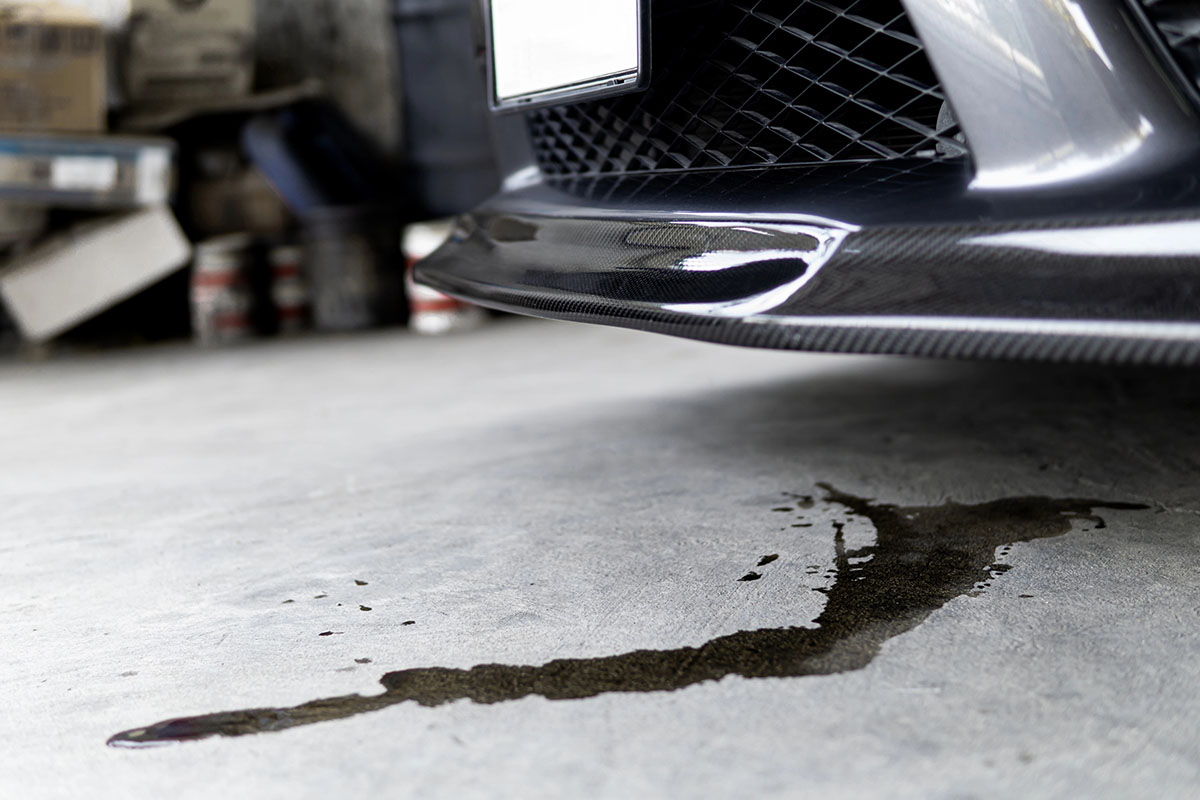
Walking out to a stain or puddle under your vehicle can trigger immediate concern, and for good reason. Some leaks are minor annoyances. Others can lead to overheating, brake failure, or engine damage if you continue driving.
One of the fastest ways to narrow down what is happening is to look at the fluid’s color and where it’s pooling. This guide will walk you through the color spectrum of automotive fluids, helping you decide if you can finish that drive or if you need to call for a tow. If you’re unsure, a professional inspection/tow is the safest choice and can confirm the source quickly and prevent a small leak from becoming a larger repair.
Clear or Water Like Fluid: Air Conditioning Condensation
Urgency: None
If you see a pool of clear water roughly under the passenger side of the dashboard area, especially on a hot day, you can relax. This is almost certainly condensation from your air conditioning system. Just like a cold glass of water "sweats" on a hot day, your AC system pulls moisture out of the cabin air to cool it. This moisture has to go somewhere, so it drains out of a tube under the car. This is a sign your system is working correctly.
Light Brown to Black Fluid: Engine Oil
Urgency: Moderate to High
This is the most common fluid leak. Fresh engine oil is a translucent amber or light brown color. However, as it cycles through your engine, it picks up carbon and dirt, turning dark brown or eventually black.
- Texture: It will feel slick and oily, and it is hard to wipe off your fingers.
- Location: Usually found directly under the engine block (front center of the car).
Check your oil dipstick immediately. If the level is sufficient, you can likely drive the vehicle to a shop. If the level is low or the leak is a steady drip, do not drive the vehicle, as oil starvation can seize the engine. Common causes include worn oil pan gaskets, valve cover gaskets, or a loose drain plug.
Red or Reddish-Brown Fluid: Transmission Fluid or Power Steering Fluid
Urgency: High
Red fluid is almost always a hydraulic fluid. Manufacturers dye transmission fluid red to distinguish it from engine oil.
- Transmission Fluid: This is usually a bright red (if new) or a reddish brown (if old). It has a thinner consistency than engine oil and may have a slightly burnt smell if the transmission is overheating. Leaks are often found near the middle of the vehicle.
- Power Steering Fluid: Many vehicles use the same type of fluid for power steering as they do for the transmission. These leaks will usually appear near the front wheels where the steering rack is located.
Driving with low transmission fluid can cause slipping gears and permanent damage to the transmission. Driving with low power steering fluid will make the steering wheel incredibly heavy and can burn out the power steering pump.
Green, Orange, or Pink Fluid: Coolant (Antifreeze)
Urgency: Critical
Coolant comes in a variety of bright, neon colors depending on the vehicle manufacturer. Older cars typically use bright green, while newer models might use orange, pink, or even blue.
- Texture: It feels watery but has a slimy, greasy consistency.
- Smell: It has a distinct, sweet smell, similar to maple syrup.
A coolant leak is a major issue. This fluid keeps your engine from overheating. If you see a puddle of coolant, do not drive the vehicle until you have checked the coolant reservoir. If the system runs dry, your engine will overheat rapidly, potentially warping the cylinder head or cracking the engine block.
Warning: Ethylene glycol (coolant) is highly toxic but smells sweet, making it dangerous for pets and wildlife. Clean up these spills immediately.
Yellow to Amber Fluid: Brake Fluid
Urgency: Emergency
Fresh brake fluid is a clear yellow to amber color, similar to vegetable oil. Over time, it can darken to brown.
- Texture: It is very slick and has a medium viscosity.
- Location: You might see this near the wheels (leaking calipers or lines) or directly under the brake pedal area (leaking master cylinder).
Do not drive! The braking system relies on hydraulic pressure. A leak means pressure is escaping, which can lead to total brake failure. Have the vehicle towed to a repair facility immediately.
Blue Fluid: Windshield Washer Fluid
Urgency: Low
If you see bright blue (or sometimes purple) fluid that looks and smells like window cleaner, it’s likely windshield washer fluid.
- Location: Usually near the front bumper where the reservoir tank sits.
This is not a mechanical emergency. It usually indicates a cracked plastic reservoir or a disconnected rubber hose. While you should get it fixed for visibility safety, it will not damage your engine to drive the car.
FAQs
Can I identify a leak by color alone?
Color is a strong clue, but it is not definitive. Some fluids change color as they age, and some vehicles use similar colored fluids across different systems. Location, smell, and vehicle symptoms help confirm the source. A professional inspection is the most reliable way to identify a leak.
Is it safe to drive if I see a small oil spot under my car?
A small oil spot might not mean you need to stop immediately, but you should check your oil level right away and monitor the spot. If the leak is active, the spot grows quickly, or you see the oil pressure light, do not drive. Even small oil leaks can worsen suddenly.
Why is my car leaking water under the passenger side?
This is commonly A/C condensation and is usually normal, especially in warm or humid conditions. If the liquid is odorless and clear and you have been running the A/C, it’s likely just water. If you’re unsure or it appears oily, have it checked.
What should I bring to a repair shop if I found a leak?
Bring photos of the puddle, the cardboard drip pattern if you used one, and any notes about symptoms such as overheating, warning lights, steering noise, or shifting issues. This helps the shop diagnose faster.
How can I be sure of the color if my driveway is dark asphalt?
The best trick is to use the "Cardboard Test." Slide a large piece of white cardboard or heavy white paper under the front of your car when you park it for the night. In the morning, pull the cardboard out. The white background will reveal the true color of the fluid, and the position of the spots will help your mechanic locate the source of the leak faster.
Can I just top off the fluid and keep driving?
For a very minor leak, topping off fluids can be a temporary stopgap to get you to a repair shop. However, it’s not a solution. Leaks rarely get better on their own; they get worse. A dripping hose can burst under pressure on the highway. Using the "top off" method as a long term fix is a gamble with your vehicle's reliability.
Why does my exhaust drip water?
This is normal. A byproduct of the combustion process is water vapor. When your exhaust system is cold, this vapor condenses into water droplets and drips out of the tailpipe. It should stop once the car warms up. If you see white smoke along with the water, that could indicate a deeper engine issue.
What does it mean if the fluid looks like a strawberry milkshake?
This is a very specific and serious sign. If you see a pink, frothy, milky mixture, it usually means coolant has mixed with transmission fluid inside the radiator. This is often called the "strawberry milkshake of death" and typically requires replacing both the radiator and the transmission.
Confirm and Fix Before It Escalates
A puddle is your early warning system. The sooner you identify the fluid and address the source, the better your chances of avoiding secondary damage. In many cases, the repair is straightforward when caught early and significantly more expensive when ignored.
If you have identified a leak or are unsure about a spot in your driveway, our team at Local Automotive can inspect your vehicle, trace the leak to its source, and provide a reliable fix. Keeping your fluids inside the car is the first step to keeping your car on the road.