
In the world of vehicle maintenance, the term ""lifetime fluid"" has become increasingly common. Many modern vehicle manuals no longer specify a service interval for the automatic transmission, leading owners to believe the fluid inside is designed to last forever. This is one of the most dangerous and costly misconceptions in the automotive industry, and as an Austin mechanic, we see the results often.
While ""lifetime"" makes for great marketing copy, it does not reflect the reality of driving, especially in a demanding environment like Texas. The combination of intense summer heat and the brutal reality of stop-and-go city traffic creates a worst-case scenario for your vehicle’s most complex and expensive component: the transmission. Believing the myth of lifetime fluid is a gamble that can lead to a multi-thousand-dollar repair bill, which is why you should prioritize transmission service in Austin TX.
The Critical Job of Transmission Fluid
To understand why the fluid fails, you first need to appreciate its vital role. Automatic Transmission Fluid (ATF) is not just a simple lubricant. It is a highly engineered fluid that performs three critical jobs:
- Lubrication: It coats gears, bearings, and bushings to prevent metal-on-metal wear.
- Cooling: It absorbs and carries away the immense heat generated by the clutch packs and torque converter.
- Hydraulic Power: It acts as a hydraulic fluid, creating the pressure needed to engage clutches and shift gears.
This fluid is the lifeblood of the transmission. When it is clean and healthy, the transmission operates smoothly. When it degrades, the entire system is at risk.
Heat: The Undisputed Enemy
The single greatest enemy of your transmission fluid is heat. Under normal operating conditions, transmission temperatures can run around 175°F. However, under heavy stress, those temperatures can skyrocket. For every 20-degree increase above this baseline, the effective life of the fluid is cut in half.
Now, consider the typical Texas commute. Whether you are inching along the I-35 corridor in Austin, navigating the 610 Loop in Houston, or stuck in Dallas rush hour, you are creating the perfect storm for transmission overheating. In stop-and-go traffic:
- The transmission is constantly shifting between low gears.
- The torque converter is frequently slipping, which generates massive amounts of heat.
- There is very little airflow over the transmission cooler (or the radiator it is often integrated with) because the vehicle is moving slowly.
This sustained, high-heat environment causes the fluid to experience thermal breakdown. Its crucial additives burn off, its viscosity changes, and its ability to lubricate and cool diminishes rapidly. It becomes less like a sophisticated fluid and more like burnt, dirty oil.
What "Lifetime" Really Means to a Manufacturer
If the fluid breaks down, why do manufacturers call it "lifetime"? The answer lies in the definition of "lifetime." For a car manufacturer, a vehicle's expected service life might only be the length of its powertrain warranty, perhaps 100,000 or 150,000 miles. Their goal is to minimize required maintenance within that period to make the vehicle more appealing to buyers.
Your definition of a "lifetime" is likely much different. You expect your car to last 200,000 miles or more. The "lifetime" fluid is not designed for that kind of longevity under real-world stress. It’s designed to outlast a warranty period, and that is often all.
The Financial Reality: Service vs. Replacement
From a business casual perspective, the math is simple. A professional transmission fluid exchange usually costs between $200 and $400, depending on the vehicle and the type of synthetic fluid required. In contrast, a modern transmission rebuild or replacement can easily cost between $4,000 and $7,000.
For a business managing a fleet of five vehicles, ignoring transmission service could lead to a $25,000 expense that could have been avoided with a few hundred dollars of preventative maintenance. Reliability is a key component of profitability. A vehicle in the shop for a week-long transmission overhaul is a vehicle that is not generating revenue.
FAQs
How can I check my transmission fluid if there is no dipstick?
Many modern vehicles have "sealed" transmissions with no dipstick under the hood. To check these, a technician must usually raise the vehicle and check a standpipe or a plug on the side of the transmission case while the fluid is at a specific temperature. This makes professional inspections even more important.
Is a transmission flush the same as a fluid exchange?
Not exactly. A flush often involves a machine that forcefully pushes new fluid through the system. A fluid exchange or a "pan drop" service is often gentler and involves replacing the filter, which is highly recommended. Many experts prefer a traditional service over a high-pressure flush.
If I have never changed the fluid and I have 100,000 miles, should I do it now?
This is a common concern. If the fluid is extremely dark and the transmission is already slipping, fresh fluid might actually make the slipping worse because it removes the "grit" that was helping the worn clutches grab. If you have high mileage and have never serviced the unit, it’s best to have a professional technician evaluate the fluid condition first.
What color should my transmission fluid be?
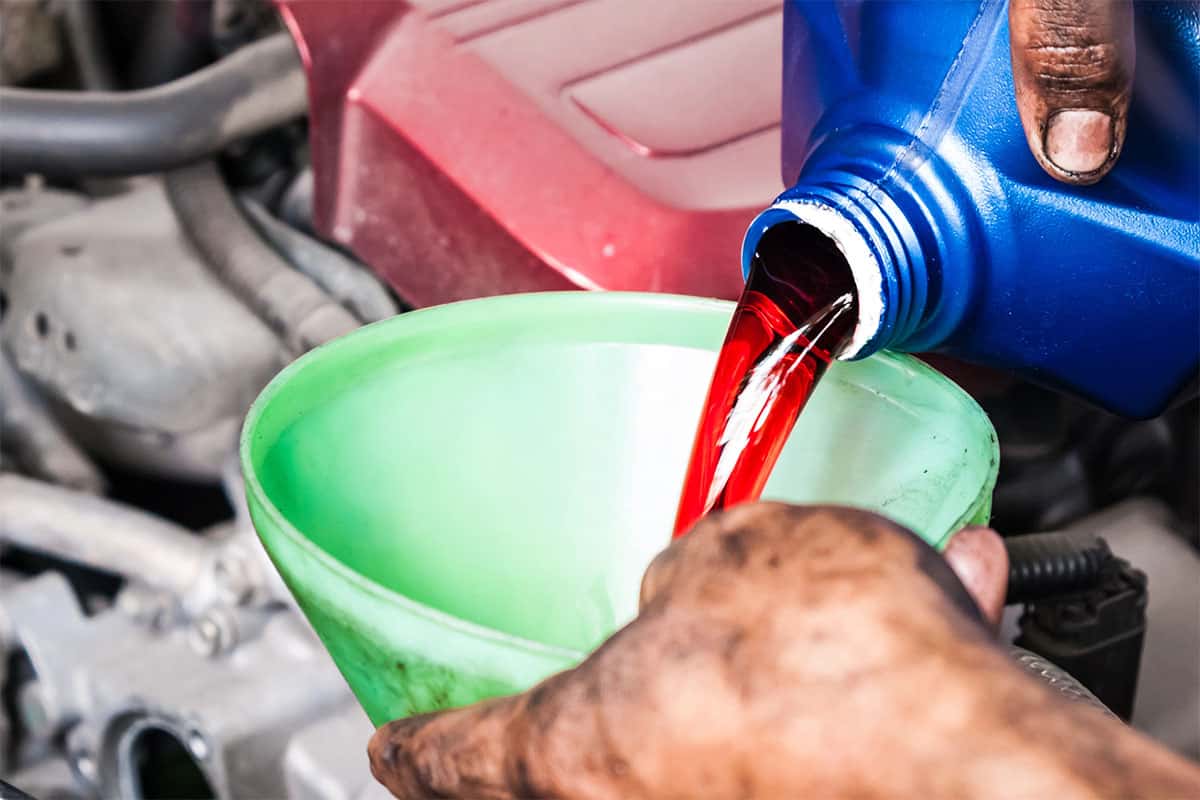
New automatic transmission fluid is typically a translucent cherry red. As it ages, it turns light brown. If it is dark brown, black, or opaque, it has reached the end of its useful life and is likely damaging your transmission.
How often should I realistically change my fluid in Texas?
For most drivers in the Texas climate, a fluid exchange every 45,000 to 60,000 miles is a safe and effective interval. If you use your vehicle for heavy towing or constant city deliveries, you may want to consider every 30,000 miles.
What are the signs of old or failing transmission fluid?
There are several key indicators. You may notice hesitant, rough, or delayed shifting. You might hear new noises like whining or clunking during shifts. The fluid itself is a tell-tale sign. Fresh ATF is typically bright red and has a sweet smell. Degraded fluid will turn dark brown or black and may have a burnt toast odor.
Is a transmission "flush" or a "drain and fill" better?
A simple "drain and fill" only removes about 30-40% of the old fluid, as most of it remains in the torque converter and cooler lines. A professional "fluid exchange" service, often called a flush, uses specialized equipment to connect to the cooler lines and replace nearly 100% of the old, degraded fluid with new, clean ATF. For a complete service, a fluid exchange is far superior.
My owner's manual does not list a service interval. What should I do?
This is the "lifetime fluid" trap. As a general rule for vehicles operating under severe conditions (which includes most Texas driving), a transmission fluid and filter service should be performed every 60,000 miles. For vehicles that do a lot of towing or heavy hauling, some shops recommend an interval as low as 30,000 miles.
Is a transmission service expensive?
A transmission fluid service is a routine maintenance item that typically costs a few hundred dollars. A transmission rebuild or replacement, which is the likely outcome of neglecting the fluid, can cost anywhere from $3,000 to $7,000 or more. The service is preventative maintenance and incredibly cheap insurance against a catastrophic failure.
Preventative Maintenance vs. Catastrophic Failure
The choice is stark. You can adhere to a marketing slogan designed to last a warranty period, or you can take steps to protect one of your vehicle's most vital systems. In the demanding driving conditions of Texas, ""lifetime"" fluid is a myth. Regular, professional transmission service is not an upsell; it’s a fundamental requirement for the long-term health and reliability of your vehicle. It’s the difference between a few hundred dollars in maintenance and a repair bill that can exceed the value of the car.
If you’re unsure about the condition of your transmission fluid or it has been more than 60,000 miles since your last service, do not gamble. Schedule a professional Austin car inspection with Local Automotive today.