
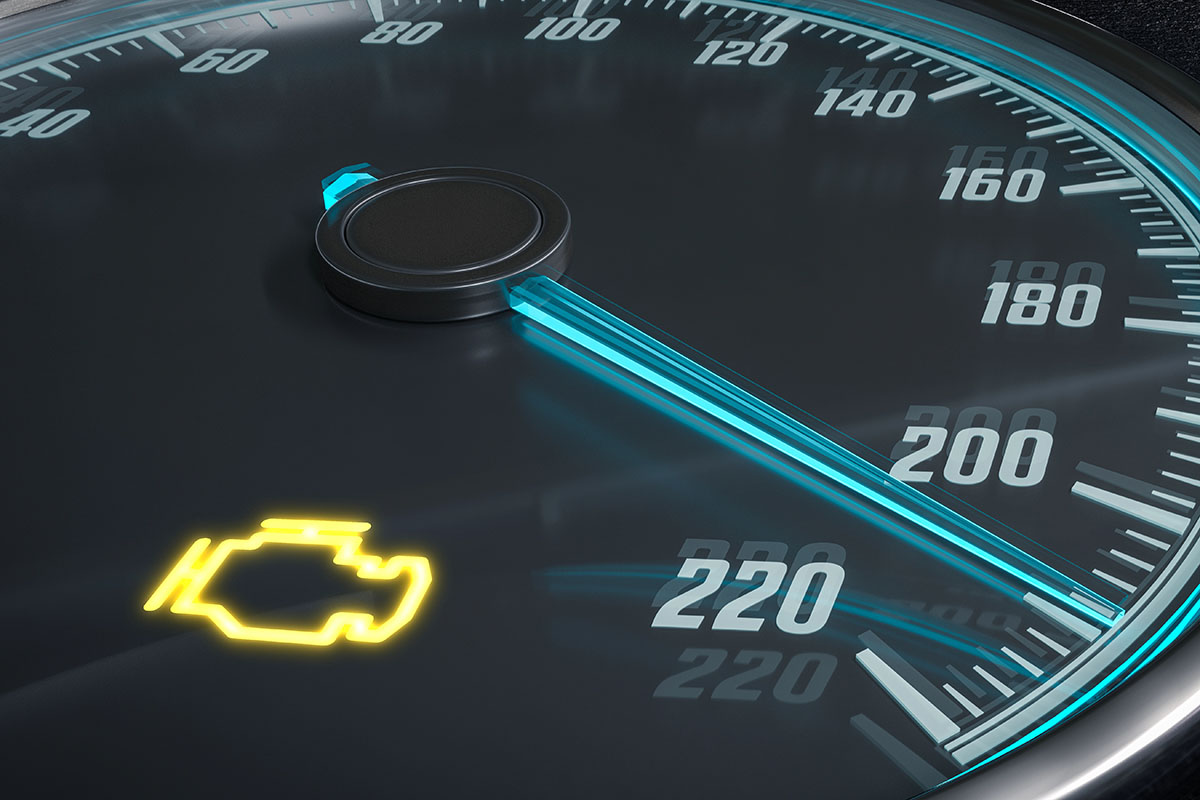
Few dashboard warnings create as much uncertainty as the check engine light. It illuminates without explanation, offering no indication whether you're facing a minor issue or impending failure. You're left wondering whether to pull over immediately, continue to your destination, or schedule service when convenient.
The check engine light (CEL) is one of the most misunderstood warning indicators in a modern vehicle. It’s a signal from your car’s onboard computer that it has detected a problem in one of its systems, but it (sometimes) does not specify what that problem is. While it’s never something to ignore, the level of urgency can vary dramatically.
Knowing how to interpret the light’s behavior is the key to making a safe decision and preventing a minor issue from turning into a major, expensive repair.
The Critical Difference: Steady vs. Flashing
The Steady Check Engine Light
A check engine light that is on and holding steady is a "non-emergency" warning. It means the onboard diagnostic system has detected a fault, but the problem is not causing an immediate, severe risk to the engine.
You can generally continue driving the vehicle, but you should not ignore it for long. A steady light can be triggered by a wide range of issues, from something very minor to a more significant problem that could worsen over time. Continuing to drive for weeks with the light on can lead to reduced fuel economy, poor performance, and potentially damage to expensive components like the catalytic converter.
The Flashing Check Engine Light
A flashing or blinking check engine light signals a serious, active problem that requires your immediate attention. This almost always indicates a severe engine misfire. An engine misfire means that unburned fuel is being dumped into the exhaust system. This can rapidly overheat and destroy your catalytic converter, a repair that can cost thousands of dollars.
If your check engine light is flashing, you should pull over as soon as it’s safe to do so and turn off the engine. Do not continue to drive. Driving with a flashing CEL can cause irreversible engine damage. The vehicle should be towed to a qualified repair shop.
What Are the Most Common Causes of a Check Engine Light
While the light can be triggered by hundreds of potential codes, a few culprits are responsible for the majority of cases.
- Loose or Faulty Gas Cap: This is the simplest and most welcome cause. The gas cap is a crucial part of the vehicle's evaporative emission (EVAP) system. If it’s loose, cracked, or missing, it can allow fuel vapors to escape, which will trigger a fault code and turn on the light.
- Failing Oxygen (O2) Sensor: The O2 sensor measures the amount of unburned oxygen in your exhaust system. This data is used by the engine's computer to optimize the fuel mixture. When an O2 sensor fails, the computer gets bad information, leading to decreased fuel efficiency and increased emissions.
- Worn Spark Plugs or Ignition Coils: Spark plugs and ignition coils are essential for igniting the air-fuel mixture in the engine. If they are worn out or failing, they can cause an engine misfire, leading to rough idling, poor acceleration, and a check engine light.
- Failing Catalytic Converter: This is one of the most expensive potential repairs. The catalytic converter is a critical emissions control device that converts harmful pollutants into less harmful gases. It typically only fails if another problem, like a bad O2 sensor or a misfire, has been ignored for too long.
- Mass Airflow (MAF) Sensor Issues: The MAF sensor measures the amount of air entering the engine. If it’s dirty or failing, it can disrupt the air-fuel balance, causing stalling, rough idling, and poor performance.
Your Next Step: From Warning Light to Clear Diagnosis
The check engine light serves an important purpose. It alerts you to conditions requiring attention before they become more serious or expensive problems. Ignoring this indefinitely risks turning minor repairs into major expenses and manageable situations into roadside emergencies.
At the same time, not every check engine light requires panic. Understanding the difference between steady and flashing lights, recognizing accompanying symptoms that demand immediate attention, and knowing when continued driving is reasonable helps you respond appropriately.
The safest approach combines reasonable caution with prompt action. If your light is steady and your vehicle performs normally, you can typically complete your immediate journey safely. But schedule diagnosis soon rather than letting days stretch into weeks. Every mile driven with an undiagnosed problem represents potential risk you cannot accurately evaluate.
When your light flashes or your vehicle exhibits concerning symptoms, don't gamble. Reduce your demands on the engine and get the vehicle checked by one of our experts at Local Automotive. The inconvenience of stopping is nothing compared to the expense and danger of engine damage.
Your check engine light is your vehicle's way of asking for attention. Listening to that request protects your engine, your wallet, and everyone’s safety on the road.
FAQs
What is the difference between a steady and a flashing check engine light?
This is the most critical distinction. A steady light is a non-emergency warning that indicates a fault has been detected and should be checked soon. A flashing light is a severe warning, usually for an engine misfire, that can cause rapid damage to your catalytic converter. You should stop driving immediately if the light is flashing.
Can a loose gas cap really cause the light to come on?
Yes, absolutely. A loose gas cap creates a leak in the EVAP system, which is designed to be sealed. The car's computer detects this leak and triggers the check engine light. Before panicking, always check that your gas cap is on tight. If you tighten it, the light may take a few days of driving to turn off.
Will the check engine light go off by itself?
Sometimes. If the issue was temporary, like a loose gas cap that has been tightened or a one-time engine hiccup, the light may turn off after several drive cycles. However, if the underlying problem persists, the light will stay on. You should never assume the problem has fixed itself just because the light went out.
Can I pass emissions testing with a check engine light on?
No, vehicles with illuminated check engine lights automatically fail emissions inspections in states that require them. The testing equipment reads your vehicle's diagnostic system and detects active trouble codes. Beyond the illuminated light itself, the underlying problems triggering the warning often cause increased emissions that would fail testing anyway. Some states allow retesting after repairs without paying additional fees. Address check engine issues well before your registration expires to avoid time pressure that might lead to rushed decisions.
Why did my check engine light come on after an oil change?
Check engine lights appearing after oil changes typically result from coincidence rather than causation, since oil changes don't affect systems monitored by the check engine light. However, some possibilities exist. If the oil cap was left loose, some vehicles detect this as an issue. Rarely, disconnected sensors or damaged wiring during service can trigger codes. Sometimes problems that were developing simply manifest shortly after service visits. If your light appeared immediately after service, return to the shop to verify nothing was inadvertently disturbed during the oil change.
Is it safe to drive long distances with the check engine light on?
Long distance driving with a steady check engine light depends entirely on the underlying cause. Some conditions pose no immediate risk for highway driving while others make extended travel inadvisable. Without knowing what triggered your specific light, you cannot accurately assess the risk. Before any significant trip with an illuminated check engine light, get professional diagnosis. If the problem is minor, you can travel with confidence. If the problem is serious, you avoid being stranded far from home with a preventable breakdown.